SECTION 1
The Signal
This week, Meta handed the keys to 3 billion people to a community builder.
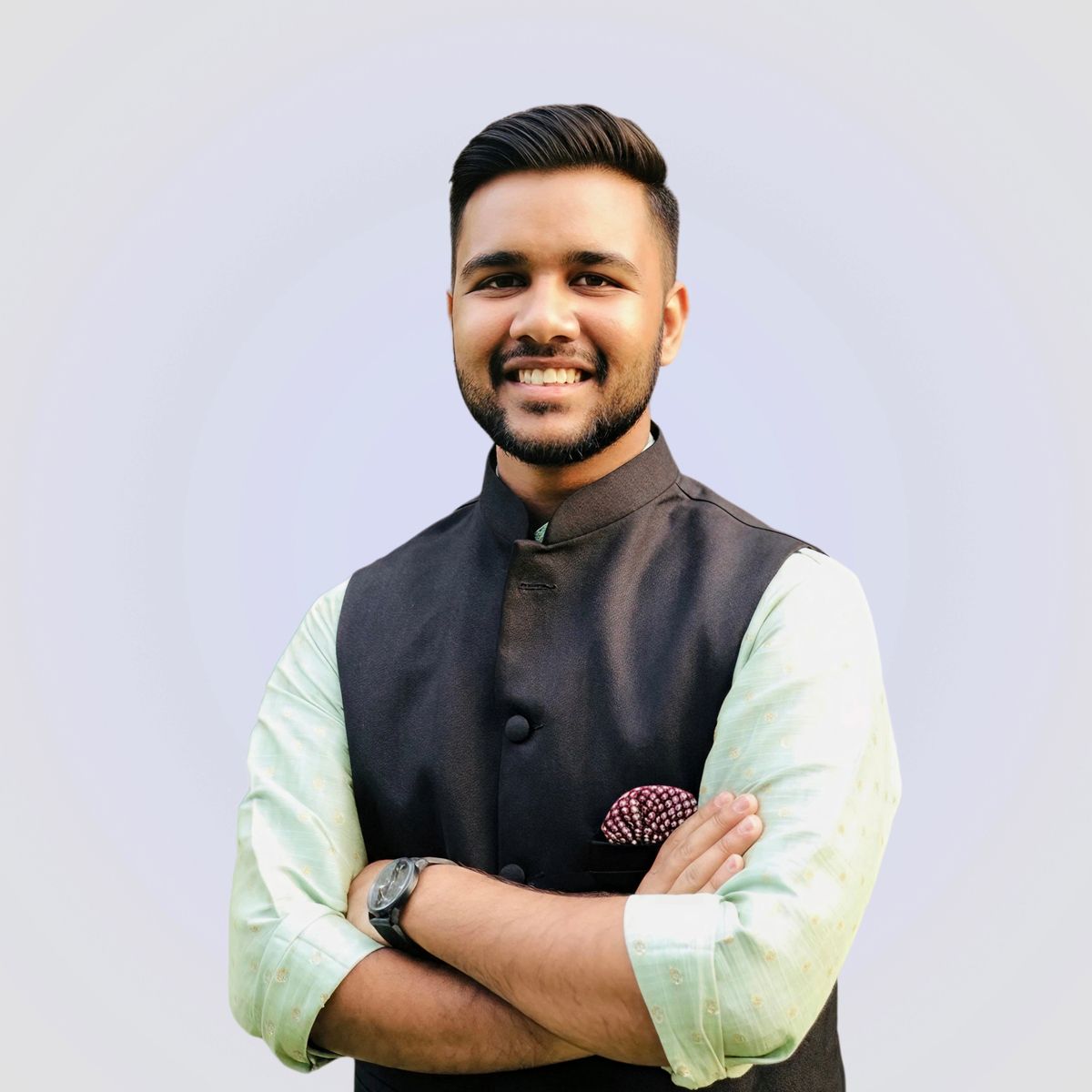
Not a fintech executive. Not a payments strategist. Not a corporate lifer who spent two decades climbing inside Meta. Kunal Shah, the founder of CRED, a company built entirely on the idea that trustworthy behaviour deserves to be rewarded, is now the global head of WhatsApp.
Every headline this week called it a fintech story. A payments play. A bet on India's digital economy. All of that is true, and all of it misses the actual headline.
What Kunal Shah actually built at CRED was not a payments product. It was a community of people who pay their bills on time, and a system that made trustworthiness itself valuable. Meta did not hire a fintech founder. Meta hired the person who understands, at the deepest level, how to build belonging at scale, and handed him the largest messaging platform on Earth.
This is not an isolated story. The same week, Figma quietly built community contribution directly into the core of its AI tools, and also introduced Config India. And GitHub crossed a milestone that should make every founder in the world pay attention: more new developers joined open source in the last twelve months than the entire population of Canada, and the platforms hosting them are scrambling to rebuild trust infrastructure fast enough to keep up.
Three industries. Three completely different headlines. One identical truth underneath all of them.
The world's most powerful companies have stopped competing on product. They are competing on who can build the most trusted community, and they are now putting community builders directly in charge of the outcome.
This edition is about what that means for everyone reading it.
— Prashant
SECTION 2
The Number That Matters

The number of new developers who joined GitHub in 2025 alone, with India contributing 5.2 million of them, the single largest source of new developer sign-ups of any country in the world.
FOR COMMUNITY BUILDERS
This is not a developer story. It is a trust infrastructure story playing out at a scale most community builders never get to witness. GitHub's own research is direct about it: open source can no longer rely on contributors sharing work hours, communication strategies, cultural expectations, or even language. The projects that will survive this growth are the ones investing explicitly in contribution guidelines, onboarding, and community governance. The same exact principles you apply in a 200-person Slack group are now mission-critical infrastructure for platforms with millions of contributors. Your skills scale further than you think.
FOR FOUNDERS AND BUSINESS LEADERS
India is now the single largest source of new developer talent in the world. If your business depends on technical talent, the community infrastructure around where that talent learns, contributes, and builds reputation is no longer a nice-to-have. It is your talent pipeline. The companies investing in developer communities in India right now are building a five-year head start that will be extremely difficult for competitors to close later.
FOR ECOSYSTEM WATCHERS
Open source is hitting what insiders are calling an "Eternal September", a permanent state of rapid, AI-accelerated growth that is testing whether trust-based, volunteer-driven community models can scale to tens of millions of participants without collapsing under their own weight. How this plays out over the next two years will tell us more about the future of large-scale digital communities than almost any other live experiment happening right now.
SECTION 3
CASE FILE [ INDIA - FINTECH - TRUST AS PRODUCT ]
How CRED Turned Trustworthiness Into a Business Model, and Why That Got Its Founder the Biggest Job in Tech

Most fintech companies compete on convenience, price, or speed. CRED competed on something almost nobody else thought to build a business around: trust as an explicit, rewarded behaviour.
The premise was almost absurdly simple when Kunal Shah first pitched it. Reward people who pay their credit card bills on time. Not with cashback. Not with discounts on random products. With genuine recognition and access, better deals, better experiences, better treatment, specifically because they had demonstrated financial trustworthiness. CRED built its entire member base around one filter: people who keep their word.
That filter created something unusual in Indian fintech. CRED's 17 million members are not just users. They are a curated community bound together by a shared, demonstrated trait: reliability. The platform did not just verify creditworthiness. It built belonging around it. Being a CRED member became a quiet social signal, the financial equivalent of a verified badge that says: this person follows through.
This is community thinking applied to one of the least obviously "community" industries imaginable. Shah did not build a feature. He built a value system and then built a business model around making that value system visible and rewarding.
When Meta went looking for someone to lead WhatsApp's next chapter, the brief was not "find a payments expert." Chris Cox was consulting entrepreneurs across India, Brazil, and Mexico to understand what WhatsApp's evolution should look like, and the conversations kept leading back to the same person. Shah was not selected because he understood fintech. He was selected because Meta needed someone who understood how to make 3 billion people trust each other inside a single platform, at a moment when WhatsApp is evolving from messaging into payments, commerce, and business infrastructure.
The transferable principle is direct and almost shockingly simple: trust is not a feature you bolt onto a product. It is the product, when you build it deliberately enough. CRED proved this at the scale of 17 million people. Shah is now being asked to prove it at the scale of 3 billion.
For anyone building a community right now, the lesson is not "build a fintech app." It is this: identify the one behaviour or value that genuinely matters to the people you want to bring together, and build your entire community model around recognising, rewarding, and making that value visible. That is what created a community valuable enough that the world's largest technology company decided its founder was the right person to run its most important platform.
SECTION 4
Business x Community: Why Figma and GitHub Are Quietly Solving the Same Problem

Two of the most important platforms in the world just made the same realisation in the same month, in two completely different industries.
At Config 2026, Figma did not just announce new design tools. It introduced skills that package up workflows and conventions into reusable instructions for its AI agent, skills you can build yourself, use from your team, or pull from the community. And it made agent chats visible to teammates by default, so people can see what directions others are exploring and build on each other's thinking.
Read that carefully. Figma did not build a private AI assistant. It built a community contribution layer directly into its most advanced product feature. The thing every design publication is covering as "Figma's new AI tools" is, underneath, a deliberate decision to make AI-powered design a collaborative, community-shaped practice rather than a solo one.
At almost exactly the same time, GitHub was publishing its own quiet admission of the same problem from a different angle. About 60% of the top growing projects on GitHub are AI-focused, and AI has dramatically lowered the barrier to entry for new contributors, but this surge of less experienced contributors creates real pressure, with maintainers facing repetitive onboarding questions and duplicate issues at a scale that threatens to overwhelm trust-based, volunteer governance models.
Figma is solving this by building community contribution into its AI tools from day one. GitHub is solving it by urging projects to invest explicitly in contribution guidelines, codes of conduct, and onboarding documentation as essential infrastructure, not optional extras.
Both companies have arrived at the identical conclusion from opposite directions: AI does not eliminate the need for community infrastructure. It increases it. The faster AI lowers the barrier to participation, the more urgently platforms need deliberate systems for trust, onboarding, and shared norms, or the flood of new participants will overwhelm the very communities meant to welcome them.
The business implication for every founder building any kind of platform, product, or community right now: if you are using AI to lower the barrier to entry for your users, you must simultaneously invest in the community infrastructure that helps those new participants find their footing. The companies that get this balance right- Figma with its skills and visible agent chats, GitHub with its push toward explicit governance- will absorb explosive growth without collapsing under it. The companies that ignore this balance will drown in the very growth they created.
SECTION 5
Around the World in 5 Communities
INDIA: Figma announced its first-ever Config India, heading to Bengaluru, joining only Singapore and London as cities to host a secondary Config event outside San Francisco. This is not a marketing decision. It is global recognition that India's design community has reached a scale and maturity that warrants its own seat at Figma's biggest stage. The signal is reinforced on the ground: Friends of Figma chapters across Hyderabad, Bangalore, Pune, Mumbai and many more city chapters ran Config Watch Parties this year with hundreds of designers gathering in person to experience the announcements together rather than alone on a laptop. India's design community is not catching up to the global conversation anymore. It is being invited to help shape it.

UNITED STATES: Meta's decision to install Kunal Shah as WhatsApp's global head, alongside a $900 million investment in CRED, is one of the most significant community-to-corporate-leadership transitions in recent technology history. Every previous Indian executive to lead a major Western technology company spent decades as a corporate insider before reaching the top. Shah arrives as an outside founder, hired specifically because of what he built outside the system, not despite it. Watch how this plays out. It may be the clearest signal yet that the corporate world is starting to value community-building skill as much as it values traditional executive experience.
SOUTHEAST ASIA: In Indonesia, the open source contribution surge GitHub is reporting globally is playing out with particular intensity, with the country now ranked among the fastest-growing developer communities anywhere. Local tech communities are responding by building structured mentorship programmes specifically designed to help new contributors navigate open source culture and etiquette before their first pull request, addressing the exact onboarding crisis that GitHub flagged as the central risk of 2026's growth.
EUROPE: Microsoft's continued investment in open agentic infrastructure, including new contributions to the CNCF ecosystem and a renewed emphasis on community governance for AI-native systems, reflects the same realisation playing out at Figma and GitHub. The companies leading the AI infrastructure race are explicitly framing community trust, not just technical capability, as the deciding factor in which open ecosystems will actually scale. The infrastructure conversation and the community conversation are no longer separate conversations.
AFRICA: Nigeria continues to be Africa's largest and most active developer community, with Lagos increasingly recognised as a continental technology hub. The community-led mentorship and study group culture that has defined Nigerian tech communities for years is now being studied internationally as a model for how to onboard rapid waves of new contributors without losing trust and quality, exactly the challenge GitHub identified as the defining test of open source in 2026.

SECTION 6
Building the ICC Ecosystem
This edition is intentionally light on ecosystem updates; the news cycle this week was simply too significant to dilute with anything else. The next edition will carry full updates on the Central Hub, the Podcast, ICC Brief, and everything happening in the lead-up to Config Watch Party Hyderabad.
SECTION 7
Your Move
FOR COMMUNITY BUILDERS
Look at the value or behaviour that genuinely matters most inside your community, the thing that, if everyone demonstrated it consistently, would make your community uniquely valuable. This week, design one small, visible way to recognise and reward that specific behaviour. Not generic engagement. The specific value your community is actually built on. CRED built a business empire around rewarding one behaviour: paying bills on time. What is your equivalent, and are you making it visible enough?
FOR FOUNDERS AND BUSINESS LEADERS
Pull your retention data by acquisition channel. Compare retention rates for users who joined through community referrals against users who came through paid acquisition. If you do not have that segmentation yet, create it this week. The gap between those two numbers is the business case for your community investment, and it is a conversation your board will understand.
FOR ECOSYSTEM WATCHERS
This week, study someone in your industry who has translated community credibility into an opportunity that looked, on paper, unrelated to what they were known for. Kunal Shah went from fintech founder to running the world's largest messaging platform. The pattern is not really about the industry. It is about what trust, once built deliberately and visibly, can unlock. Ask yourself: what is the equivalent unexpected door that my community credibility could open, if I made it visible enough to the right people?
SECTION 8
One Last Thing
Three companies, three industries, one unmistakable signal this week.
The hardest problem in technology right now is not the technology.
It is trust, at scale, fast enough to keep up with growth that no one entirely controls.
The people who understand how to build that trust, deliberately, visibly, and at human scale, are no longer the people running the community Slack channel in the corner of the org chart.
They are being handed the keys to the entire building.