SECTION 1
The Signal
I have felt it more times than I can count.
The weight of holding something you built. The quiet exhaustion that comes not from doing too much, but from caring too much for too long without anyone asking if you are okay. The moment where the passion that started everything feels, just for a second, like a burden rather than a gift.
Every builder knows this feeling. Most never say it out loud.
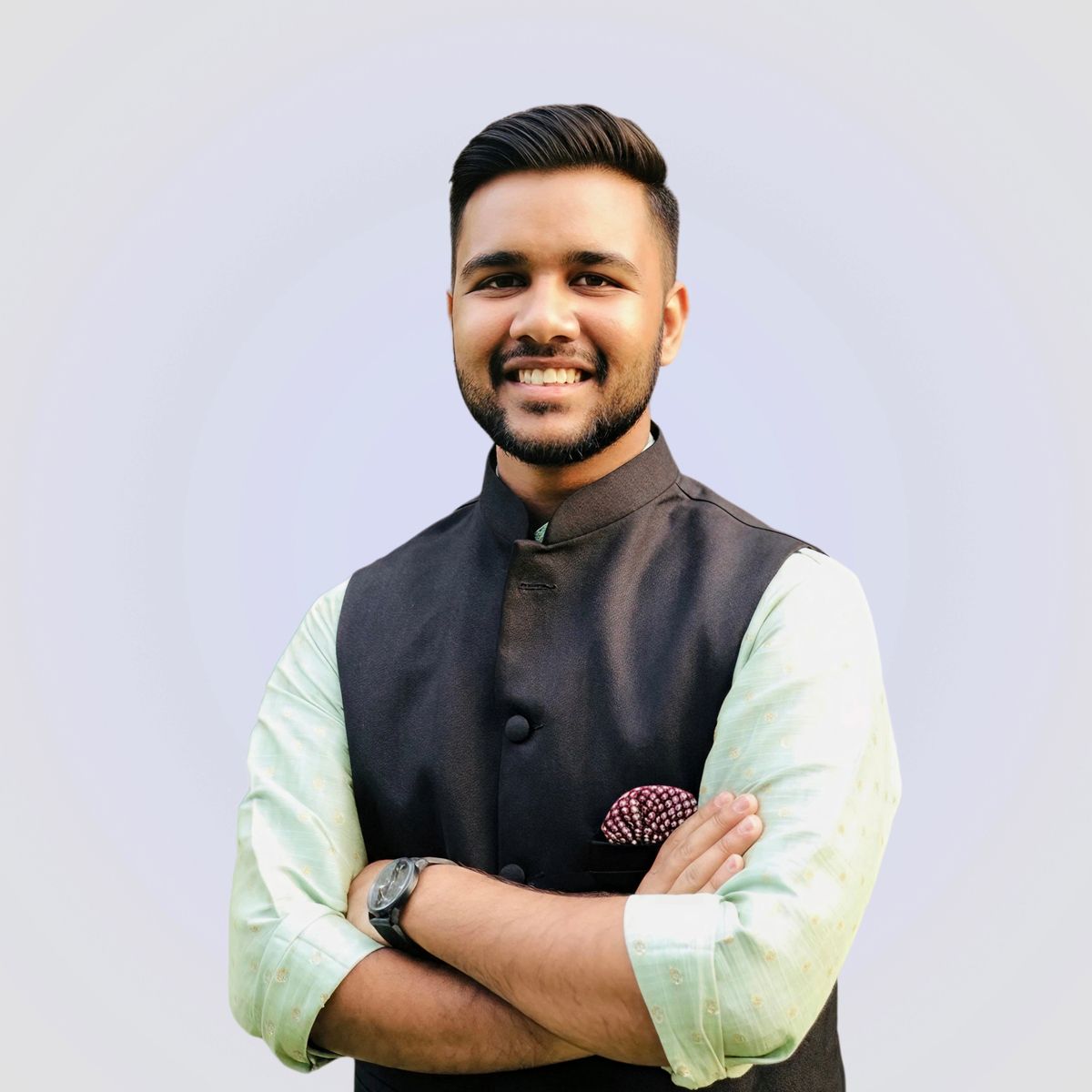
I recently hosted The Unfiltered Design, a house event with Friends of Figma Hyderabad. Real conversations. Real energy. Real people in a room talking about design and creativity with the kind of honesty that only happens when the space feels safe enough for it. And something shifted in me that evening. The weight I had been carrying quietly lifted, not because someone fixed anything, but because the community gave back what I had been giving it. The room reminded me why the path I am on is a true impact maker. Not a could-be. Not a should-be. An actual one. And that I should walk and run this path rather than second-guess it with "what ifs" and "what could have been."
That moment is what this edition is about.
Because the people most at risk of community burnout are not the disengaged ones. They are the most passionate ones. The builders. The holders. The ones who show up for everyone else and forget to show up for themselves.
This edition is for them. For you.
— Prashant
SECTION 2
The Number That Matters

The percentage of community builders who report signs of member burnout inside their communities, according to Circle's 2026 Creator Economy Statistics report. But here is the number inside that number that nobody is talking about: the people identifying member burnout are themselves experiencing it. The builders are burning out, watching their members burn out, while holding the entire space together for everyone else.
FOR COMMUNITY BUILDERS
You are not imagining it. Over three-quarters of workers globally report experiencing some degree of burnout in 2026, and community builders, who carry both the operational weight of running a space and the emotional weight of caring for the people inside it, are among the most exposed. The research is consistent: employees who feel no one supports them are 70% more likely to experience burnout. The tragic irony is that the community builder is often the last person anyone thinks to support. You built the support system. You are not supposed to need one.
FOR FOUNDERS AND BUSINESS LEADERS
If you have a community manager, a head of community, or anyone whose job is to hold the human layer of your organisation together, ask them this week how they are actually doing. Not as a performance review. As a human being talking to another human being. Deloitte's 2025 Workforce Intelligence Report found that lack of recognition nearly doubled as a burnout driver in a single year, jumping from 17% to 32%. The people holding your community together are the least likely to be recognised for the invisible work they do. That needs to change.
FOR ECOSYSTEM WATCHERS
Burnout is now a $322 billion annual productivity loss globally. The community builders burning out quietly are not a wellness statistic. They are an economic one. The communities that collapse, the movements that stall, the products that never reach their potential, many of them trace back to a single builder who ran out of capacity before they ran out of ideas. That is a systemic failure, not a personal one.
SECTION 3
CASE FILE [ GLOBAL · COMMUNITY LEADERSHIP ]
The Invisible Work of Community Building and Why It Never Shows on a Dashboard
There is a word for what community builders do that rarely appears in a job description.
Attunement.
It is the continuous, mostly invisible act of reading the emotional temperature of a group. Knowing when the energy is low before anyone says anything. Feeling when a member is on the edge of leaving before they announce it. Sensing when the community needs celebration and when it needs quiet. Adjusting, adapting, recalibrating, constantly, without being asked, without being thanked, and without anyone noticing it is happening at all.
This is the invisible work. And it is exhausting in a way that no productivity tool can measure and no OKR can capture.
A community builder running a small but active community, a podcast, a newsletter, a Slack group, and an event series, described it this way: "I thought passion would protect me from burnout. Community builders bring people together around things they love. How could that lead to exhaustion? Until one Saturday afternoon, I found myself overwhelmed and could not explain why. The only word that fit was burnout."
That observation, that passion is supposed to be the antidote to burnout but sometimes accelerates it, is the insight most missing from the conversation around builder fatigue. When your work is your identity, when the community you hold is also the community that holds you, the lines between giving and depleting become invisible until they are already crossed.
The data from Circle's 2026 report adds structural context to this lived experience. Community operators are already adapting: 21% are actively reducing programming to prevent burnout, and another 21% have introduced intentional quiet periods or rest phases into their community rhythm. These are not failures of ambition. They are signs of maturity, a growing recognition that sustainable communities require sustainable builders.
The transferable principle: the health of a community is a direct reflection of the health of the person holding it. Not the content calendar. Not the event frequency. Not the engagement rate. The builder. When the builder is depleted, the community feels it before anyone can articulate why. When the builder is restored, even briefly, even imperfectly, the community feels that too.
This is why the most important investment any community-led organisation can make is not in tools or tactics. It is in the human being at the centre of the community holding the whole thing together.
SECTION 4
Business x Community: What Happens to the Community When the Builder Disappears
There is a test that every community should be able to pass, but most cannot.
If the person holding the community stepped away for 30 days, what would happen?
For most communities, the honest answer is: it would slow dramatically, and for many, it would stop. The content would not go out. The moderation would lapse. The energy would flatten. Members who came for the connection would start to drift. And by the time the builder returned, the momentum that took months to build would need to be rebuilt from scratch.
This is not a community. This is a performance. A one-person show wearing the costume of a collective
The distinction matters enormously from a business perspective. A community that can only function when its founder is present is not an asset. It is a liability. It is entirely dependent on a single point of human failure, and that failure, when it comes, tends to arrive exactly when the builder is least equipped to handle it.
The Circle 2026 data is instructive here: 61% of creators now use async formats as a core engagement channel, and 50% use micro-learning and bite-sized formats to reduce overwhelm. These are not just design choices. They are resilience strategies, ways of building communities that can breathe even when the builder needs to.
The business principle that emerges from this is one that the best community operators understand and most founders do not: community infrastructure must be designed to outlast the founder's best days. The rituals, the norms, the peer connections, the shared language, these are the load-bearing walls of a community. The founder is the architect, not the structure.
What does this look like practically? The communities that survive and scale have three things the others do not. First, members who feel ownership, not just membership. People who contribute to the community's direction, not just consume its content. Second, rituals that run without prompting, weekly threads, monthly reflections, and recurring formats that members initiate because the habit is baked into the community's culture. Third, recognised voices beyond the founder, members whose perspectives are amplified, whose leadership is visible, whose presence signals that this community is bigger than any one person.
Build those three things, and you have built something that can sustain a builder through their worst days. Which means you have also built something that can grow beyond their best ones.
SECTION 5
Around the World in 5 Communities
INDIA: The Unfiltered Design, a house event run by Friends of Figma Hyderabad, brought together designers and creatives for honest, unguarded conversation about design, creativity, and the real experience of building in public. No sponsors. No stages. No performance. Just people in a room saying what they actually think. The energy in that room was the kind that cannot be manufactured by a content strategy or replicated by an algorithm. It is the energy that only happens when a community trusts its space enough to be real inside it. That event is also a reminder of what is coming: Config Watch Party Hyderabad 2026 on 27th June, the biggest community moment on the annual calendar for designers in the city, currently in the planning stages with partnerships and sponsorships being explored. More soon.
UNITED STATES: Bumble's community team published a quiet but significant finding this year: their highest-performing community moderators reported burnout rates 40% higher than the average employee, despite also reporting some of the highest job satisfaction scores. The paradox is real and measurable. The work of community is deeply meaningful and deeply costly at the same time. The solution Bumble implemented, structured recovery periods, peer moderator networks, and explicit recognition programmes for community team members, produced a 28% reduction in moderator turnover within six months. The lesson: meaning does not protect against burnout. Only structure does.
SOUTHEAST ASIA: In Singapore, the team behind Tech Ladies Asia, a community of over 35,000 women in technology across the region, publicly shared their experience of near-collapse in early 2026. The three co-founders, all of whom were running the community alongside full-time jobs, hit a wall simultaneously. What saved the community was not a strategic pivot. It was radical transparency with their members. They told the community what was happening. The response was immediate and overwhelming, members stepped up, took on moderation roles, led programming, and collectively held the space while the founders recovered. The lesson: your community wants to help you. You have to let them.
LATIN AMERICA: In São Paulo, the team behind Comunidade Jornada, a professional development community for first-generation university graduates entering the corporate world, built what they call a "community care protocol." Every quarter, the founding team does a formal check-in not just on member engagement metrics but on their own capacity and well-being. They ask: are we giving from a full place or an empty one? The protocol has allowed the community to operate for four years without a single founding team member burning out to the point of leaving. Four years. In a space where the average community builder tenure is under 18 months. The difference is not passion. It is intentional, structural self-care built into the operating rhythm of the community itself.
AFRICA: In Lagos, a WhatsApp-based community for independent creative professionals called The Brief Room crossed 2,000 members in 2025 with zero paid promotion and zero formal structure. The founder, a freelance art director, described running it as "the most energising and most exhausting thing I have ever done simultaneously." When she took a two-week break without announcement, the group kept going, members posted prompts, shared work, and gave feedback. When she returned, she said: "I realised I had accidentally built something that did not need me. That was the most terrifying and liberating moment of my community-building life." That accidental self-sufficiency is the goal most builders are not consciously designing for.
SECTION 6
Building the ICC Ecosystem

36% open rate. 17% click-through rate. Zero subscriber growth.
I want to be transparent about what these numbers mean and what they do not.
The open rate dropped from 62.86% in Edition 01 to 36% in Edition 03. That is a real drop, and it deserves an honest explanation, not a spin. The most likely reason: the invitation campaign brought in subscribers who have not yet built the habit of opening. A new subscriber who joined because of a general invitation is different from a subscriber who sought this publication out. The habit of opening needs to be earned, edition by edition. 36% is still above the industry average. But the direction matters, and I am watching it.
The 17% click-through rate is genuinely strong. It means the readers who are here are deeply engaged, not passive scanners. They are reading, thinking, and acting. That is the core I am building from.
Zero subscriber growth is the number that requires the most honest reflection. The invitation campaign has reached its natural limit for now. Organic growth needs to become the primary engine. That means the content needs to be good enough to share, and the people who share it need to feel proud doing so. That is the only growth strategy worth building.

8 total plays. 2 subscribers.
Episode 02 is not out yet. And I want to be honest about why.
It is not a lack of time. It is a refusal to rush something that deserves to be done right. The Inside Community Podcast exists to bring the most valuable, honest insights from community builders who are actually in the work, not talking about it from the outside. That means the guest list matters more than the publish date. I am building that list carefully, thinking through who has the right experience, the right honesty, and the right perspective to make every episode worth a listener's full attention.
8 plays and 2 subscribers are small numbers. They are also patient ones. The communities and publications that last are almost always the ones that refused to ship something average just to show movement.
Episode 02 will come when it is ready to be great. Not before.
The lesson for anyone building something with a long shelf life: speed is not always the signal of progress. Sometimes the most disciplined thing you can do is wait until you can do it right.

The initial draft with all phases planned is complete. The hub is being prepared for a first look before it goes public. I am making it available to a small group first for honest, early feedback before it opens to everyone. If you want to be part of that first group, reply to this edition. There are no forms. No funnels. Just a direct conversation with the people I trust most.

33 subscribers. 44% open rate on the last post. 287 total views over 90 days. 22% growth in that window.
A few subscribers unfollowed recently. Two new ones came in. The net is 33, and every single one of them chose to be there.
The 22% growth over 90 days is the number worth paying attention to. It is not explosive. It is consistent. And in a content landscape where most publications either grow fast and flatten or never grow at all, consistent is the rarest and most valuable kind of momentum.
The ICC Brief is a different publication from The ICC Notes, quieter, more personal, more reflective. Where this newsletter covers the community economy with intelligence and rigour, ICC Brief is where I write about the experience of building, the doubt, the clarity, the fog, and the moments where the path becomes visible again. If the ICC Notes is the publication you read to think more clearly about community, ICC Brief is the one you read to feel less alone in building inside it.
The lesson from the unfollow: not everyone who finds you is meant to stay. The ones who stay are the ones who matter. Protect the quality of your list more than its size.

The biggest community moment of the year for designers in Hyderabad is being planned. Partnerships and sponsorships are being explored to create the best possible experience. If you are in the ecosystem and want to be part of this, as an attendee, a partner, or a collaborator, reach out directly. This one is worth being at.
SECTION 7
Your Move
FOR COMMUNITY BUILDERS
This week, do the 30-day test on your own community. Ask honestly: if I stepped away for 30 days, what would happen? Then identify the one ritual, the one member voice, or the one structural element that would keep the community breathing without you. If you cannot identify it, that is your most important community design challenge right now, not growth, not content, not engagement. Resilience. Build the thing that holds when you cannot.
FOR FOUNDERS AND BUSINESS LEADERS
Find the person in your organisation who does the most invisible community work, the one who holds the culture, who manages the human energy, who makes sure people feel seen. Not the loudest person. The most essential one. This week, tell them specifically what you see them doing and why it matters. Not in a performance review. In a conversation. The research shows that lack of recognition nearly doubled as a burnout driver in a single year. You have the power to reverse that for at least one person this week.
FOR ECOSYSTEM WATCHERS
Schedule a recovery period before you need one. Not after you hit the wall. Before. Put it in your calendar right now, a week, a weekend, even two days, where you are not creating, not moderating, not responding. Tell your community in advance. Watch what happens. The communities that survive are the ones whose builders have learned to rest without guilt. Your capacity is not infinite. Protecting it is not laziness. It is the most responsible thing you can do for the people who depend on what you build.
SECTION 8
One Last Thing
The room at The Unfiltered Design reminded me of something I keep forgetting and keep needing to remember.
The path does not get easier when you stop doubting it. It gets easier when the community you are building shows you, in a moment you were not expecting, that it was always real.
The energy in that room was not manufactured. It was not the result of a strategy, a content calendar, or a growth hack. It was the accumulated result of showing up, caring deeply, and trusting that the people you were building for would eventually show you why it was worth it.
They will.
They always do.
You just have to stay in the room long enough to feel it.